Builders leave three layers, not one
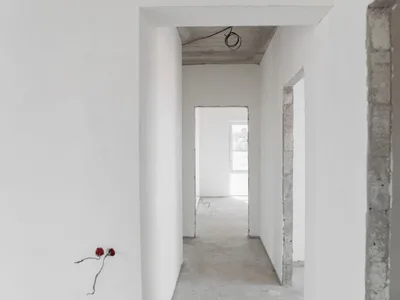
When construction finishes, what you see is not one uniform layer of dust waiting to be wiped away. There are at least three distinct layers in different physical states. First, coarse debris: plaster chips, grout residue, cut tile fragments, and anything heavy enough to fall and stay where it landed. Second, fine airborne dust, particles light enough to remain suspended before eventually settling on every horizontal surface in the building. Third, the contamination that lands on glass, mirrors, and polished fittings after the first two layers are disturbed. Each layer requires different tools, different techniques, and must be addressed at a specific point in the sequence. Treating them as one job is the mistake that turns a single visit into two.
Coarse debris comes out before anything else
The first pass through a newly built or renovated space is not a clean in the usual sense. It is a clearance. Loose rubble, plaster lumps, tape residue, and construction off-cuts need to be physically removed before any surface wiping begins. If you vacuum or wipe a surface before clearing the coarse debris from the floor and corners, any vibration or foot traffic will redistribute that material and coat the surfaces you just cleaned. Some of it is also abrasive enough to streak across a floor if dragged rather than lifted, or heavy enough to damage equipment not designed for it. The clearance stage is unglamorous, but skipping it or rushing it means every subsequent stage takes longer and produces worse results.
Fine particles keep settling long after work stops
Once the coarse debris is removed, the space rarely looks clean. Fine construction dust, the kind produced by cutting, sanding, and grinding, is light enough to remain airborne long after the work that created it has stopped. It drifts and settles on every horizontal surface: ceiling mouldings, AC grille blades, curtain tracks, windowsills, and the tops of door frames. In a coastal climate where humidity is high, this dust can bond to surfaces rather than sitting loosely, making dry wiping inadequate. Upper surfaces and AC grilles accumulate it fastest, because warm air carries particles upward before they fall. This layer must be addressed from ceiling to floor, so that what you disturb from the top does not land on a surface you have already cleaned below. Working in any other direction simply moves the dust around.
Glass and fittings are the final stage
Glass, mirrors, chrome fittings, and polished metal surfaces are left until last for a straightforward reason: every earlier stage releases dust back into the air. Clearing rubble, vacuuming ceilings, wiping down walls, all of these put particles back into suspension. Any glass you clean in the middle of the process will carry a fresh film of dust within the hour. By leaving glass and fittings until after the dust has been extracted from the bulk of the space and given time to settle again, you only need to clean them once. The same principle applies to light switches, socket faceplates, and door handles, which collect fingerprints as readily as dust. Clean them prematurely and you will return to them before the job is done. They are the finishing detail, not a mid-process step.
Two cleans serve entirely different purposes
A builders' clean and a final clean are often mentioned as though they are the same thing at different intensities. They are not. A builders' clean is the clearance and dust removal described above: industrial work, designed to make a space safe to walk through and ready for fitting out or final finishing. A final clean assumes construction activity is fully complete and addresses the residual fine dust that has continued to settle, the smears on glass, the marks on paintwork from tape and protective film removal, and the condition of floor surfaces and soft furnishings that need to reach a liveable standard. Running a final clean before the builders are actually finished means doing it again. The sequence is not a preference; it is the only arrangement in which the work holds.